M&A Analysis
Roku Stock: What the $22B Fox Acquisition Means for ROKU Shareholders
Fox is acquiring Roku for $96 in cash plus 0.9693 Fox Class A shares per share. Both boards approved unanimously, closing is targeted for the first half of 2027, and the neutrality that anchored the Roku thesis goes with the deal.
Summary
What Roku shareholders get: $96.00 in cash plus 0.9693 shares of Fox Class A stock for each Roku share — worth $160.00 at the deal's $66.03 Fox reference price, and about $147 at Fox's post-announcement price — plus, for anyone who holds through closing, roughly 27% of the combined company. The deal needs shareholder and regulatory approval and is targeted to close in the first half of 2027 [1].
Fox Corporation agreed on June 15, 2026 to acquire Roku in a cash-and-stock deal valuing the company at roughly $22 billion in enterprise value [1]; the terms are set out in the companies' SEC filings [7][8]. Both boards approved the agreement unanimously. Founder and CEO Anthony Wood keeps an ongoing role and joins Fox's board after closing [2]. Until then, Roku operates as a standalone company. For shareholders, though, the practical change happened the day the agreement was signed: the question of who controls Roku's home screen now has an answer, and it is no longer Roku.
Fox–Roku deal terms at a glance
| Scenario (baseline stated) | Cash per ROKU share | Stock leg (0.9693 × FOXA) | Total package value |
|---|---|---|---|
| Headline deal — FOXA at $66.03 reference price (10-day VWAP as of Jun 10, 2026) | $96.00 | $64.00 | $160.00 |
| FOXA at $52.34 (Jun 16, 2026 close) | $96.00 | $50.73 | $146.73 |
| Cash floor (stock leg hypothetically at zero) | $96.00 | — | $96.00 |
Package values are arithmetic from the disclosed exchange terms ($96.00 + 0.9693 × FOXA price) [1]; the June 16 FOXA close is per market data [6]. The cash leg is fixed; the stock leg moves with Fox's share price every trading day until closing.
What changed
The consideration is fixed in structure but not in value. The $96.00 cash leg does not move. The stock leg does: 0.9693 Fox Class A shares per Roku share, worth $64.00 at Fox's $66.03 reference price, the 10-day volume-weighted average as of June 10 [1]. Fox stock fell 16.8% the day the deal was announced and kept sliding, which pulled the real value of the package well below the $160 headline [4][5]. At FOXA's June 16, 2026 closing price of $52.34, the same package was worth about $146.73. An intraday quote of $51.54 would imply about $145.96, but that was not the closing price [6].
Roku's own stock barely reacted to the announcement itself. Bloomberg reported on June 12 that the company was exploring a sale, and the shares jumped on that report; the $160 offer worked out to a 33.7% premium over the close before the news leaked, so most of the move happened before the deal was official [4]. At closing, Roku shareholders will own roughly 27% of the combined company, with existing Fox holders at 73% [1].
Wood, who ran the sales process, called the outcome "a great price" [3] on the analyst call and said the transaction lets Roku execute its strategy faster than it could alone.
Why it matters
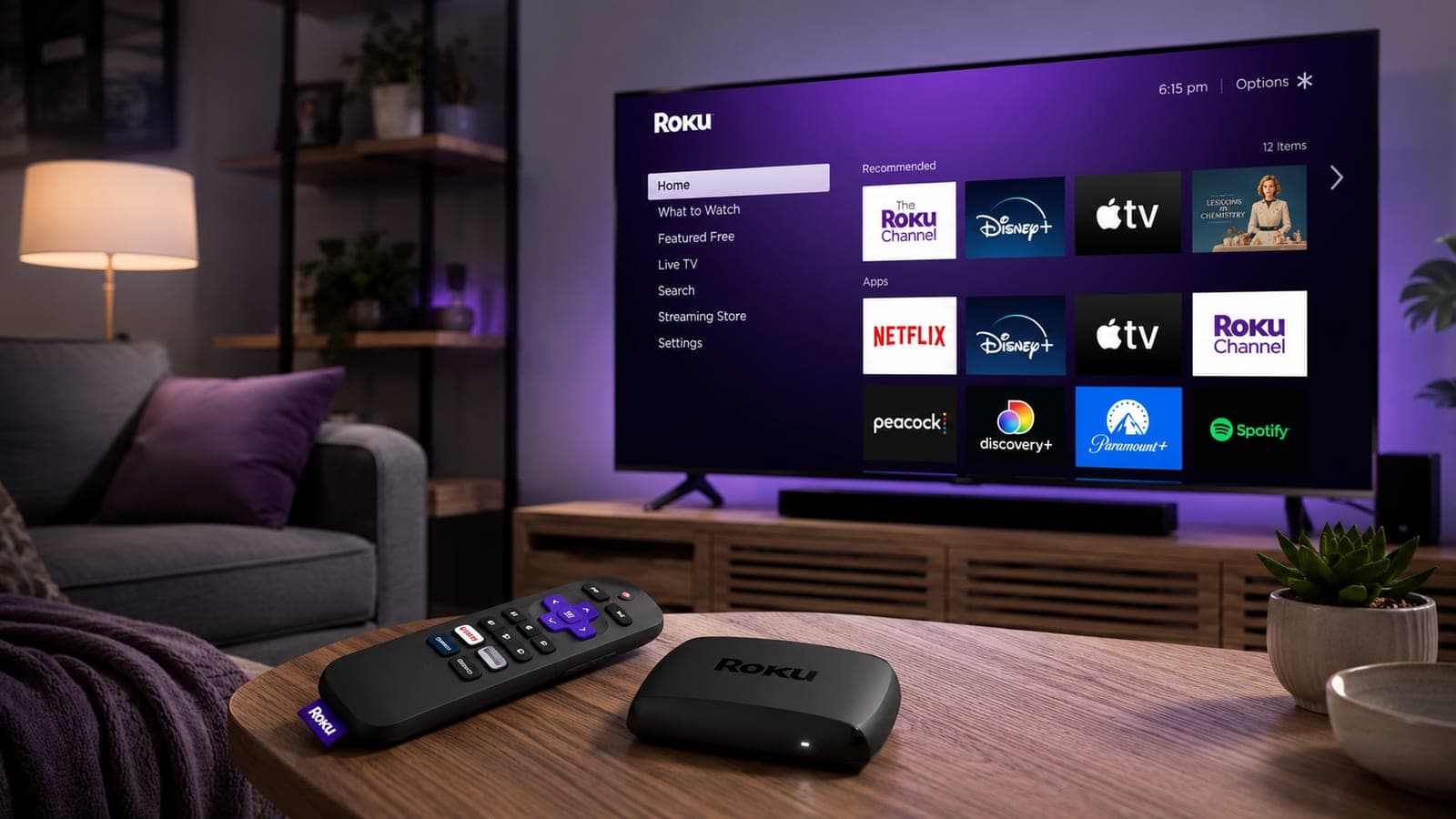
Roku's value was built on neutrality. It sat between viewers and every streaming service, from Netflix and YouTube to Comcast's Peacock, and monetized that position without competing head-on with the content owners it distributed. Wall Street questioned exactly that on the deal call: Barclays asked how Roku remains a trusted neutral partner for YouTube, Netflix, and Comcast once a content competitor owns it [6]. Fox CEO Lachlan Murdoch answered that keeping Roku open and partner-friendly is essential to the deal, and Wood said the company intends to keep promoting partner services alongside its own [3].
They may be sincere. Incentives still shift. Fox is a sports, news, and entertainment company that will now own the front door to more than 100 million streaming households, along with Roku's first-party viewing data [1]. Every future negotiation between Fox and a rival streamer happens with that fact in the room.
The consideration mix matters just as much. Anyone who holds Roku through closing receives cash plus Fox stock, and Fox is funding the cash side partly with new debt, with pro forma net leverage around 2.8x at close [1]. The market's first verdict on that trade was Fox's 16.8% one-day drop and a 52-week low [4][5].
What to watch
Four things between now and closing. First, the two shareholder votes and the regulatory review: the companies target the first half of 2027, and antitrust scrutiny of a deal that combines a major content owner with the leading TV operating system is not a formality [1]. Second, Fox's share price, which now sets the real value of each Roku share; the package is $96 plus roughly 0.97 Fox shares, so every dollar Fox loses takes about a dollar off the deal. Third, the spread between Roku's market price and the implied deal value, which shows how much closing risk the market is pricing in. Fourth, whether the open-platform commitments get any contractual teeth, such as carriage terms, data-sharing rules, or remedies a regulator might attach as a condition of approval.
Is Fox buying Roku?
Yes. Fox Corporation and Roku signed a definitive merger agreement on June 15, 2026, under which Fox acquires Roku for $160.00 per share in cash and stock, valuing the company at roughly $22 billion in enterprise value [1]. Both boards approved the deal unanimously. It still needs approval from both companies' shareholders and from regulators, and closing is targeted for the first half of 2027 [1].
Why did Fox stock drop after the Roku deal?
- Price: the $160 offer was a 33.7% premium to Roku's close before sale reports surfaced, and investors questioned whether Fox overpaid [4].
- Debt: Fox is funding the $96-per-share cash leg partly with new borrowing, backed by $12 billion in committed bridge financing, with pro forma net leverage around 2.8x at close [1].
- Dilution: the stock leg hands legacy Roku holders roughly 27% of the combined company [1].
- Strategy doubts: analysts on the deal call asked how Roku stays a trusted neutral partner for YouTube, Netflix, and Comcast once a content competitor owns it [6].
- The result: Fox shares fell 16.8% on announcement day, hit a 52-week low, and slid further the next session [4][5].
What could move ROKU next?
Between now and the expected close in the first half of 2027 [1], the stock trades mostly on deal mechanics rather than Roku's own results:
- Shareholder votes at both Fox and Roku (dates to be set in the proxy filings).
- Regulatory review — antitrust scrutiny of a major content owner buying the leading TV operating system.
- Fox's share price, which directly sets the value of the stock leg: every $1 move in FOXA moves the package by about $0.97 per ROKU share.
- The merger-arb spread between Roku's market price and the implied package value, which reflects the market's view of closing risk.
- Quarterly results from both companies while the deal is pending, especially Fox's leverage and Roku's platform revenue.
Roku stock FAQ
What do Roku shareholders receive in the Fox deal?
Each Roku share converts into $96.00 in cash plus 0.9693 shares of Fox Class A common stock. At Fox's $66.03 reference price that totals $160.00 per share; the actual value floats with Fox's share price until closing.
When is the Fox–Roku deal expected to close?
The companies target the first half of 2027. The deal was approved unanimously by both boards on June 15, 2026, but still requires approval from both companies' shareholders and from regulators.
Why is ROKU trading below the $160 offer price?
Two reasons: the stock portion of the package is worth less than $64 whenever Fox trades below its $66.03 reference price (Fox fell 16.8% on the announcement), and the market discounts for the risk that the deal is delayed or blocked before its expected first-half-2027 close.
Will Roku remain an open platform under Fox?
Fox and Roku say yes. Fox CEO Lachlan Murdoch called keeping Roku open and partner-friendly essential, and founder Anthony Wood said Roku will keep promoting partner services alongside its own. Whether those commitments get contractual or regulatory teeth is one of the open questions of the deal.
What happens if I hold Roku stock through the closing?
You receive the cash and become a Fox shareholder: legacy Roku holders will own roughly 27% of the combined company, whose business is anchored in broadcast, cable, sports rights, and streaming. Whether that exposure fits your portfolio is an individual decision; this article is informational, not advice.