

Why Carnival Corporation & plc (CCL) Stock Fell 4.9% on Aug 20, 2026
The clearest new catalyst: Oil spike on Middle East tensions.
Why did CCL stock fall?
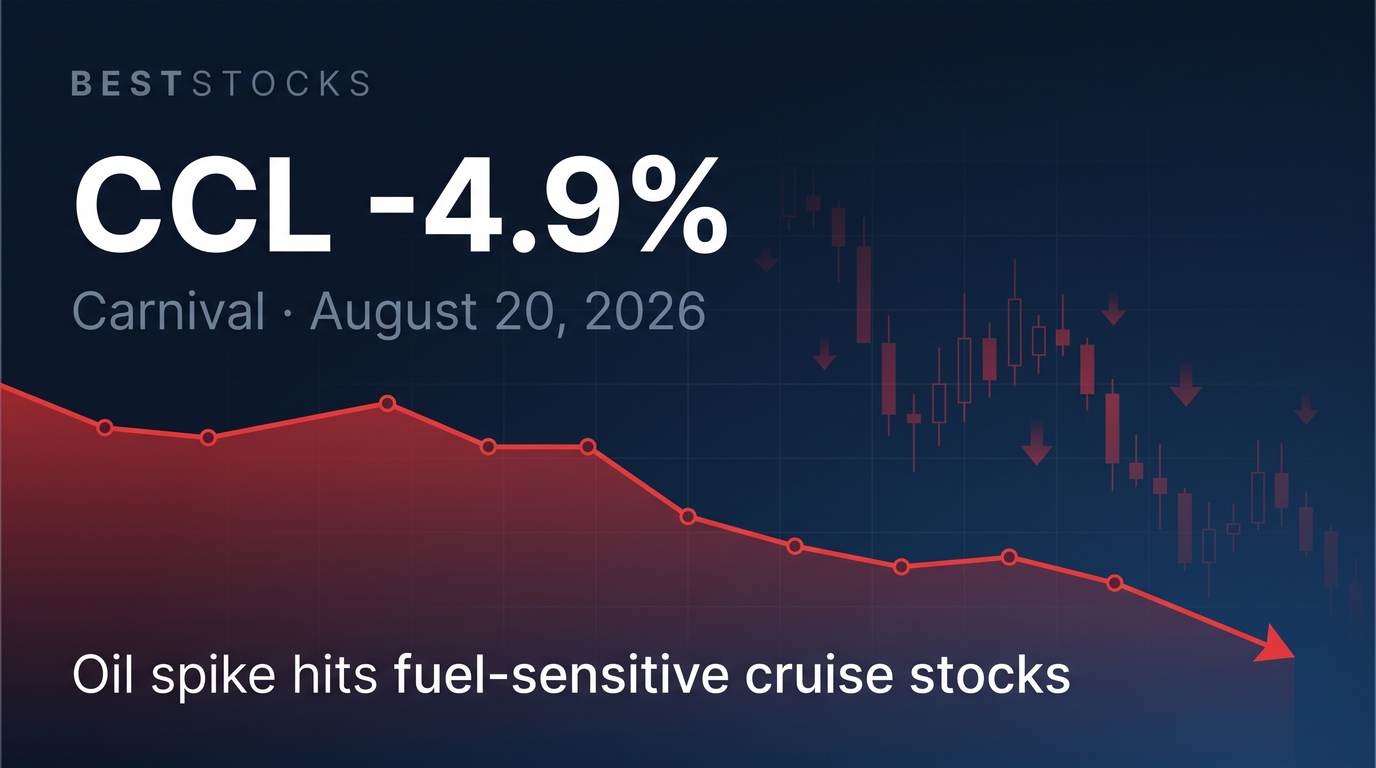
Carnival shares fell 4.95% to $25.37 on Thursday, August 20, 2026 as cruise stocks were hit by another jump in oil prices — Brent crude rose more than 2% to about $93.78 as U.S.-Iran tensions intensified — raising fuel-cost concerns for the fleet. The decline came alongside losses in Royal Caribbean and Norwegian Cruise Line and broader weakness in consumer-facing stocks, with no Carnival-specific negative announcement behind the move.
- Oil spike on Middle East tensions: Brent crude rose more than 2% to about $93.78 on August 20 as U.S.-Iran tensions intensified and President Trump threatened harsher measures against countries supporting Iran. Higher fuel costs are a direct headwind for fuel-intensive cruise operators like Carnival.
- A cruise-sector move, not company news: Cruise stocks sold off together — Royal Caribbean fell about 4.31% and Norwegian Cruise Line also declined — and contemporaneous reporting tied the drop to rising oil/fuel costs, with no company-specific news driving Carnival's move.
- Broad risk-off tape: The pressure came on a weak overall session: the S&P 500 fell about 0.87% and the Dow about 1.32%, with consumer-facing stocks pressured after a disappointing Walmart report and rising Treasury yields — a risk-off backdrop that compounded the oil-driven cruise selloff.
How the story developed
- August 20, 2026Brent crude rises more than 2% to ~$93.78 on intensifying U.S.-Iran tensions; the broad market sells off (S&P -0.87%, Dow -1.32%) after a weak Walmart report.
- August 20, 2026CCL falls 4.95% to $25.37 alongside Royal Caribbean (-4.31%) and other cruise names, with no company-specific news.
What it could mean for CCL investors
The constructive case
- The decline was macro/oil-driven with no Carnival-specific bad news, so it can reverse if oil prices ease and geopolitical tensions cool.
- Carnival's underlying demand and booking trends were not the reason for the move — the sector reacted to fuel costs, not company fundamentals.
The cautious case & what could invalidate it
- Higher oil directly raises Carnival's fuel bill, a real margin headwind if crude stays elevated.
- Cruise stocks are high-beta to geopolitics and consumer sentiment, both of which turned negative that day.
- The move came amid broader consumer-discretionary weakness (a weak Walmart report), pointing to softening sentiment around discretionary spending.
Initial detection
BestStocks first flagged CCL intraday on Aug 20, 2026; this analysis was finalized after the close using the confirmed −4.9% session move and additional catalyst research.
Show the initial intraday note
Carnival Corporation & plc (CCL) fell 4.95% from a prior close of $26.69 to $25.37 on Thursday, August 20, 2026 as cruise stocks were hit by a jump in oil prices, raising fuel-cost concerns as Middle East tensions escalated. There was no Carnival-specific negative announcement — the decline came alongside losses in other cruise names amid a broad risk-off day.
What to watch next: Carnival's fuel costs and demand are sensitive to oil and geopolitics — watch Brent crude and Middle East headlines. As a macro/sector-driven drop, it can reverse if oil eases; the next company-specific test is Carnival's own earnings.
Frequently asked questions
Why did Carnival Corporation & plc (CCL) stock fall on Aug 20, 2026?
Carnival shares fell 4.95% to $25.37 on Thursday, August 20, 2026 as cruise stocks were hit by another jump in oil prices — Brent crude rose more than 2% to about $93.78 as U.S.-Iran tensions intensified — raising fuel-cost concerns for the fleet. The decline came alongside losses in Royal Caribbean and Norwegian Cruise Line and broader weakness in consumer-facing stocks, with no Carnival-specific negative announcement behind the move.
How much did CCL stock fall on Aug 20, 2026?
CCL fell 4.9% during the Aug 20, 2026 trading session.
What were the main drivers behind CCL's move?
Oil spike on Middle East tensions; A cruise-sector move, not company news; Broad risk-off tape.