Stock Analysis
CrowdStrike (CRWD) Falls ~10% and Zscaler (ZS) Jumps on a $43.9 Billion All-Stock Cybersecurity Deal
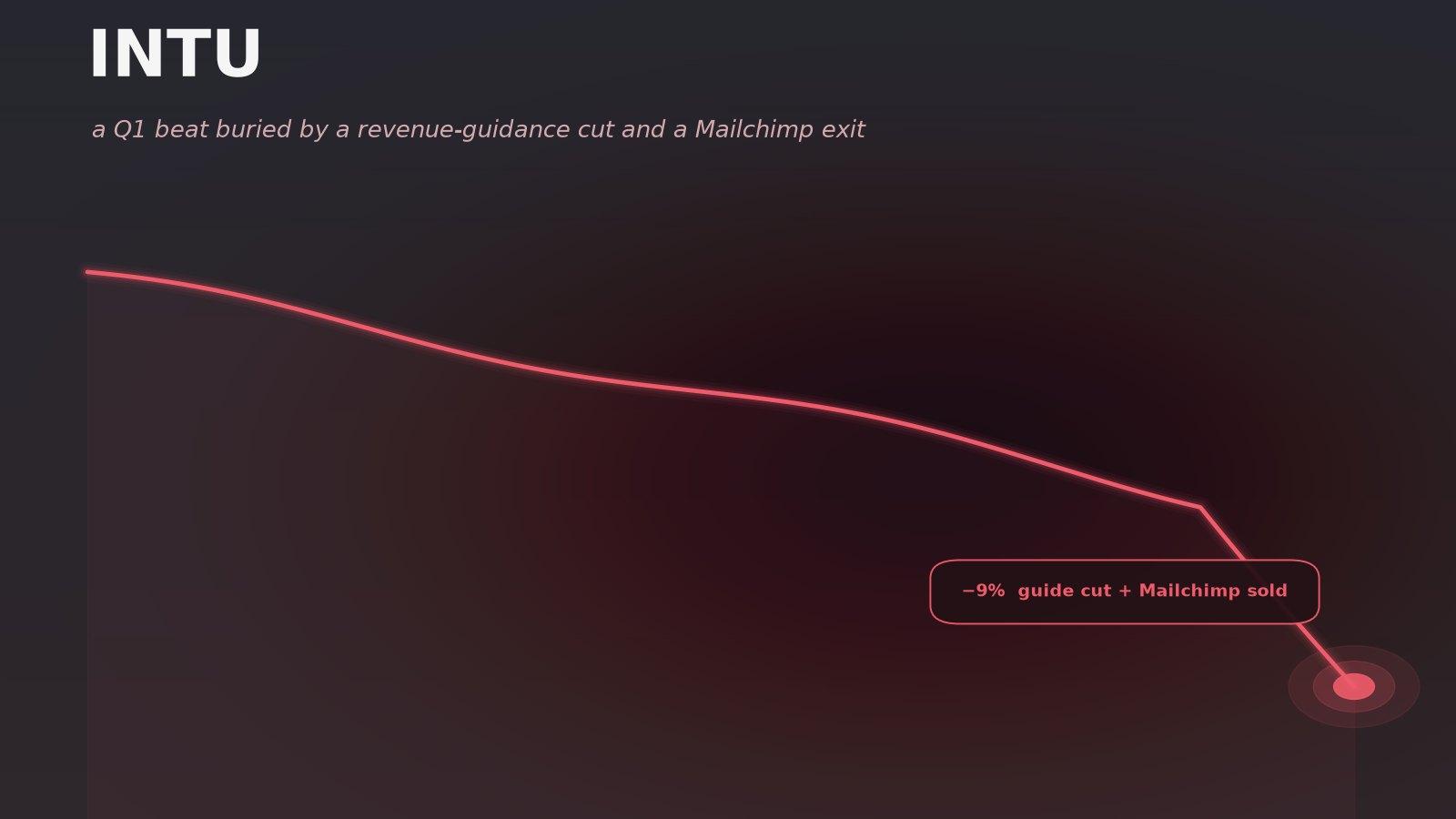
CrowdStrike (CRWD) agreed to buy Zscaler (ZS) on November 23 in an all-stock deal valuing Zscaler at an enterprise value of about $43.9 billion — the largest cybersecurity acquisition on record — and shares moved in opposite directions, the way takeovers usually split: the target jumped and the acquirer fell. Zscaler rose about 16%, while CrowdStrike dropped about 10.5% even as the Nasdaq-100 rallied ~7%, so it underperformed the index by about 17.5 points — and it fell despite releasing its best quarter ever (ARR up 27%) alongside the deal. Zscaler holders get 1.135 CrowdStrike shares each (~$260 a share, a ~34% premium), but the pop was smaller than the premium because the all-stock value moves with CrowdStrike, which fell. The strategic bet is platform consolidation — folding Zscaler's zero-trust network security into CrowdStrike's Falcon platform to build a >$10 billion-ARR security giant rivaling Palo Alto and Microsoft. CrowdStrike fell as investors weighed the dilution (new shares equal to ~19% of its count), the premium and the integration and regulatory risk; peers rose too, but mostly with a strong tech rally. The deal targets a second-half fiscal-2028 close.
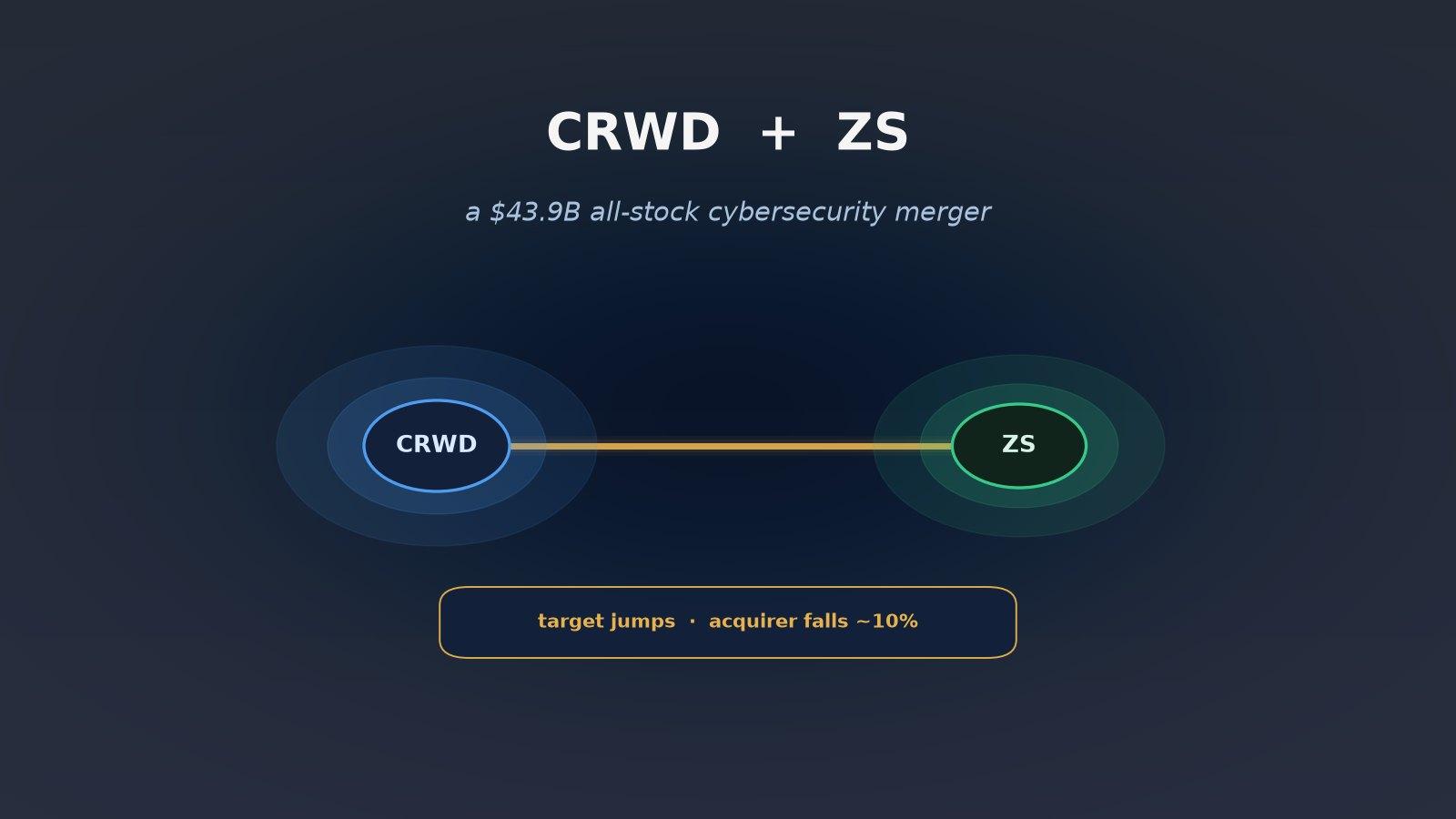
On Monday, November 23, 2026, CrowdStrike (NASDAQ: CRWD) agreed to acquire Zscaler (NASDAQ: ZS) in an all-stock deal valuing Zscaler at an enterprise value of about $43.9 billion (roughly $42.46 billion in equity value) — the largest cybersecurity acquisition on record [2]. The market's split-second verdict was textbook M&A: the target soared and the acquirer sank. Zscaler jumped about 16%, while CrowdStrike fell about 10.5% — and it did so on a day the Nasdaq-100 rallied roughly 7%, so CrowdStrike underperformed the index by about 17.5 percentage points, suggesting deal-related concerns played the leading role in the decline despite a rising market [1]. What makes it more striking is that CrowdStrike released what it called its best quarter in company history alongside the deal, before Monday's open — yet the stock fell as investors digested the acquisition [6].
The strategic logic is a bet on consolidation and "platformization." CrowdStrike is a leader in securing the endpoint (its Falcon platform covers devices, workloads, identity and data); Zscaler is a leader in zero-trust network security — "securing the connections between them," in the companies' framing [2]. The aim is to integrate the two into a single full-stack security platform — the companies' "One Platform, One Data Layer, One Flex Contract" — pitched squarely at the agentic-AI era, where protecting the connections between AI agents becomes a new battleground. CrowdStrike estimates that adding Zscaler will expand its addressable market by more than $185 billion in 2029, and the companies expect the combined business to carry more than $10 billion in annual recurring revenue at closing [2]. CEO George Kurtz framed the ambition bluntly: a path "to become the largest AI safety and security company the world has ever seen." [2]
The deal terms — and why the target's jump was smaller than the premium
Under the agreement, Zscaler holders receive 1.135 CrowdStrike shares for each Zscaler share, which valued Zscaler at about $260.41 a share — a ~34% premium to its close on Friday, November 20 [2]. Existing CrowdStrike shareholders will own about 84.1% of the combined company and Zscaler holders about 15.9%. Zscaler's founder and CEO, Jay Chaudhry — whose affiliates hold roughly 34% of the company and have signed voting agreements backing the deal — will continue to run the Zscaler business and join CrowdStrike's board [2]. (The 34% support helps but does not by itself secure the vote, which still needs a majority of Zscaler's shares.) The exchange ratio is also subject to a cap on CrowdStrike's new-share issuance under Nasdaq rules that could reduce it — with cash substituted for the difference — if the issuance would otherwise be too large; it is a technical contingency, not a certainty [2].
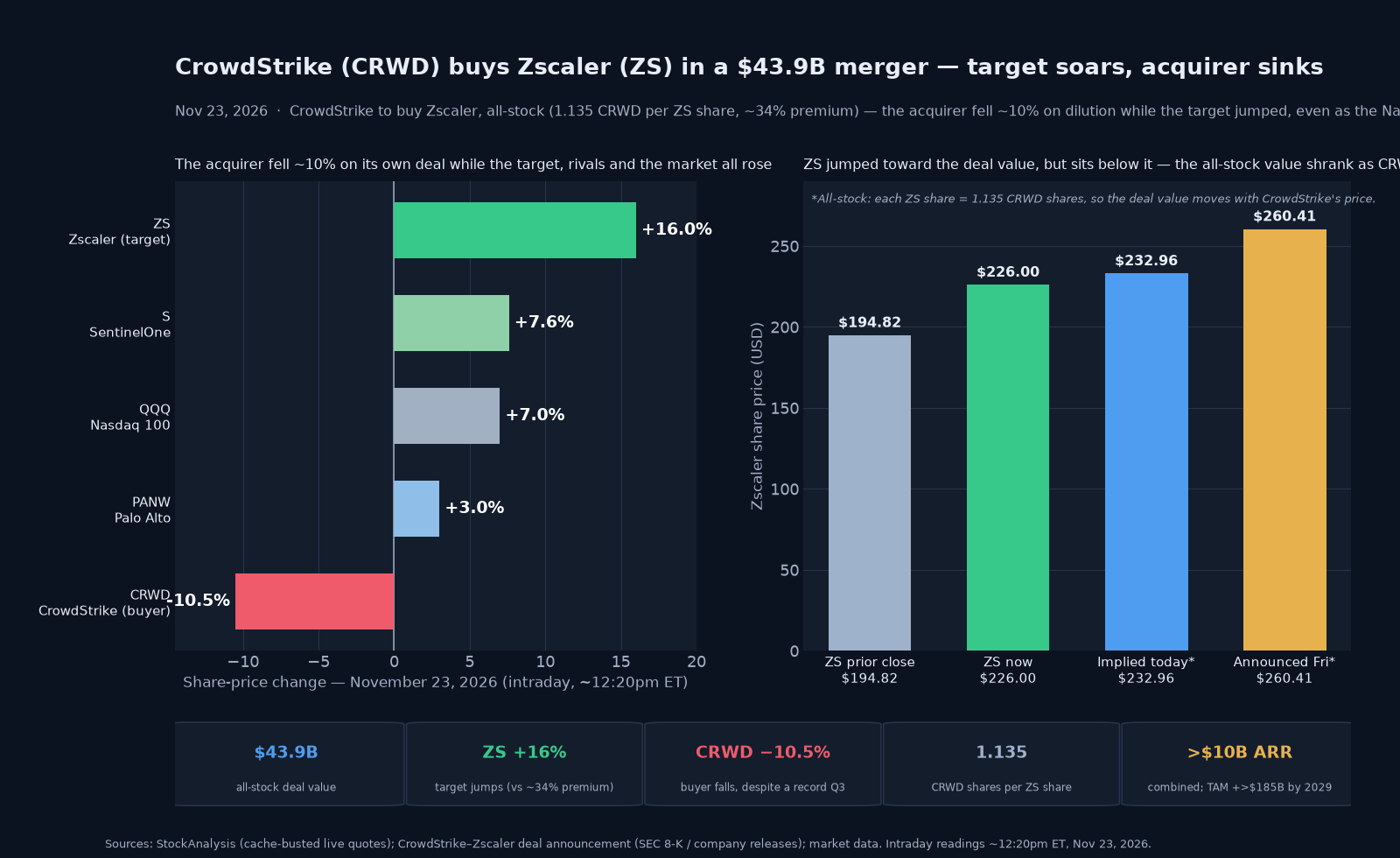
Here is the subtlety that explains why Zscaler jumped only ~16% rather than the full 34% premium: this is an all-stock deal, so each Zscaler share is now effectively worth 1.135 CrowdStrike shares — and CrowdStrike's own stock fell 10.5% on the news. The implied value of the offer therefore dropped from about $260 on Friday's CrowdStrike price to roughly $233 today (1.135 × ~$205). At about $226, Zscaler trades a few percent below even that reduced figure — a modest merger-arbitrage discount that reflects the deal's completion and timing risk; it is not expected to close until the second half of CrowdStrike's fiscal 2028 (roughly late 2027 into early 2028) and still needs a Zscaler shareholder vote and regulatory approvals [1]. In other words, because the consideration is primarily stock, the offer's dollar value fluctuates with CrowdStrike's share price, and Zscaler's trading price also reflects the odds and timing of completion — a defining feature of stock-for-stock takeovers.
Why the acquirer fell
CrowdStrike's ~10.5% drop points to investor unease about the economics and execution of a large, richly priced, all-stock acquisition. First, dilution: CrowdStrike is issuing substantial new equity — Zscaler holders will own about 15.9% of the combined company, which works out to new shares equal to roughly 19% of CrowdStrike's existing count (though in exchange, holders receive ownership of Zscaler's business). Second, the price: a 34% premium on a transaction of this size is a substantial equity commitment, and Zscaler was already a premium-valued, not-yet-GAAP-profitable grower (it trades around ten times sales, with a trailing net loss) [3]. Third, integration and execution risk: merging two large security platforms is hard, and CrowdStrike carries the memory of its 2024 global outage, a reminder that scale cuts both ways. Fourth, regulatory risk: the deal will need regulatory clearances, and its scale could prompt detailed scrutiny of the competitive overlap between two of enterprise security's biggest names, though the outcome and duration of any review are uncertain; a fiscal-2028 close also leaves a long window for the landscape to shift [2]. The counterweight is that CrowdStrike says the deal will be accretive to free cash flow per share immediately upon closing, even before synergies, and targets roughly $1 billion of annual run-rate revenue synergies within 30 months and about $500 million of cost synergies within 18–24 months [2]. For now, the market appears to be weighting those risks more heavily than the promised synergies.
Analyst view
This is a landmark bet that enterprise security is consolidating into a handful of broad platforms, and CrowdStrike is paying up to make sure it is one of them. The bull case is genuinely strategic: the combination unites endpoint and network security into a single data layer at a moment when customers increasingly want one vendor, it lifts combined recurring revenue above $10 billion, it opens a vastly larger addressable market, it is framed as free-cash-flow accretive from the first day after closing, and it carries voting support from Chaudhry and affiliates holding about 34% of Zscaler. The bear case is about price and risk: CrowdStrike is issuing new shares equal to roughly 19% of its existing count and paying a 34% premium for a slower-growing, still-unprofitable (on a GAAP basis) asset; it is taking on real integration and outage-sensitivity risk; and the deal faces regulatory review and will not close until fiscal 2028, an eternity in security. The most balanced read is that the industrial logic is credible — platform consolidation is the industry's direction of travel, and owning the network layer is a plausible way to widen CrowdStrike's moat against Palo Alto Networks and Microsoft — but that investors appear unwilling to price in the projected benefits before execution, which is why CrowdStrike fell even on a record quarter. For Zscaler holders, the calculus is now largely a bet on CrowdStrike's stock and on the deal closing, not on Zscaler's standalone trajectory. The right lens from here is the merger-arbitrage spread (a live read on the market's confidence in the deal, shaped by completion risk, timing and hedging costs), the regulatory posture, and whether CrowdStrike can deliver the synergies without an integration stumble. This is descriptive analysis of a news-driven move, not investment advice.
Why it matters
Cybersecurity has spent two years consolidating — Palo Alto Networks has built a platform through serial acquisitions, and the industry mantra has become "platformization," selling a bundle rather than a point product. CrowdStrike buying Zscaler is the largest and most emphatic example yet, and it reframes the competitive map: the endpoint leader plans to add the network-security layer to go head-to-head with Palo Alto and Microsoft across the full stack [2]. Security peers also rose — Palo Alto Networks and SentinelOne both gained — though largely alongside a strong tech rally that day (the Nasdaq-100 was up about 7%, and Palo Alto actually lagged it), so the deal's precise effect on their shares is hard to isolate from the broad move, even if consolidation plausibly adds scarcity value and takeout speculation for smaller independents [5]. The deal is also a test of two broader forces: how regulators will treat combinations among the biggest security vendors, and whether the market still rewards large all-stock "transformational" acquisitions — the ~10.5% hit to CrowdStrike suggests investors have grown wary of buyers bearing big premiums. For the sector, the message is that the era of scaled, AI-era security platforms is arriving fast, and independent mid-cap security vendors could face growing consolidation pressure.
The move, in one cross-section
The same-session tape shows the signature of a company-specific deal: the acquirer fell hard while the target, its rivals and the broad market all rose [5]:
| Name (ticker) | Nov 23, 2026 (intraday) | Read-through |
|---|---|---|
| ZS — Zscaler (target) | ≈+16% | Jumps on the ~34% takeover premium — but less than the premium because the all-stock value moves with CrowdStrike [1] |
| S — SentinelOne | ≈+7.6% | Smaller endpoint rival up, roughly in line with a strong tech rally; consolidation may add takeout appeal [5] |
| QQQ — Nasdaq-100 (ETF) | ≈+7.0% | Broad market sharply higher on an AI-chip rally — so CrowdStrike fell against a rising tape [5] |
| PANW — Palo Alto Networks | ≈+3.0% | The platform rival this deal targets — firmer, though it actually lagged the broad market [5] |
| CRWD — CrowdStrike (acquirer) | ≈−10.5% | Falls as investors weigh the deal's dilution, premium and integration risk — even after a record quarter [6] |
CrowdStrike dropping ~10.5% while the Nasdaq-100 rose ~7% and its security peers gained suggests its slide was driven by its own deal rather than a sector or macro move — it was the only name of the group to fall, and it fell hard against a rising tape [5].
What to watch
- The merger-arbitrage spread. The gap between Zscaler's price and the implied deal value is a live read on the market's confidence in the deal (shaped by completion risk, timing and hedging costs) — watch whether it widens (rising doubt) or narrows [1].
- The regulatory path. Whether combining two of enterprise security's biggest names draws a prolonged review; the deal targets a second-half fiscal-2028 close, leaving a long window and uncertain outcome [2].
- Synergy delivery and the share count. Whether CrowdStrike can realize the ~$1 billion revenue and ~$500 million cost synergies and prove the deal accretive enough to justify issuing new shares equal to roughly 19% of its existing count [2].
- CrowdStrike's standalone momentum. Its record quarter (ARR $6.26 billion, up 27%) still underpins the stock; watch whether strong core results reassure investors as the deal works through. Moves are tracked on the CrowdStrike stock page [6].
Deal and market data snapshot — November 23, 2026
| Figure | Value | As-of / source |
|---|---|---|
| The deal | CrowdStrike to acquire Zscaler, all-stock, at an enterprise value of ~$43.9B (~$42.46B equity value); exchange ratio 1.135 CRWD shares per ZS share (~$260.41/share, a ~34% premium to ZS's Nov. 20 close); CRWD holders own ~84.1%, ZS holders ~15.9% of the combined company. The ratio is subject to a Nasdaq-rules cap on CRWD's share issuance (cash substituted for any excess) — a contingency | Nov 23 — CrowdStrike/Zscaler announcement (SEC 8-K) [2] |
| Strategic terms | Combined ARR >$10B at close; CRWD estimates the deal expands its TAM BY >$185B in 2029; ~$1B annualized run-rate revenue synergies (by ~30 months) and ~$500M cost synergies (18–24 months); "immediately accretive to free cash flow per share" before synergies; close in 2H of CRWD's fiscal 2028 (roughly late 2027–early 2028), pending a ZS shareholder vote and regulatory approvals | Nov 23 — deal announcement [2] |
| CRWD (acquirer) quote | ~$205.25 (≈−10.5%) — fell despite reporting its "best quarter ever"; prior close $229.44; day range $200.53–$225.51; 52-week range $85.68–$286.99; market cap ≈$211B; P/S ≈37 on ~$5.75B revenue; FCF ≈$1.8B (31% margin); beta ~1.15 | Mon, Nov 23, 2026, ~12:20pm ET — StockAnalysis [1] |
| ZS (target) quote | ~$226.00 (≈+16%) — below the ~$233 implied deal value (1.135 × CRWD), an arbitrage discount; prior close $194.82; day range $218.88–$247.90; 52-week range $114.63–$291.80; market cap ≈$36.9B; P/S ≈10.5 on ~$3.51B revenue; FCF ≈$856M (24% margin); trailing net loss | Nov 23 — StockAnalysis [1] |
| Leadership | Jay Chaudhry (Zscaler founder/CEO) continues to lead the Zscaler business and joins CrowdStrike's board; he and affiliates (~34% of ZS) signed voting agreements (though a majority of ZS shares is still required); George Kurtz leads the combined company. Both boards approved unanimously | Nov 23 — deal announcement [2] |
| CrowdStrike Q3 FY2027 | Released alongside the deal, before Monday's open: ending ARR $6.26B (+27%), quarterly revenue ~$1.58B (+28%), free cash flow ~$474M — described by the company as its best quarter in history | Nov 23 — CrowdStrike Q3 FY2027 results (SEC 8-K) [6] |
| Same-day cross-section | CRWD −10.5% vs ZS +16%, PANW +3.0%, S +7.6%, QQQ +7.0% (intraday) — the acquirer was the only one lower, and fell against a sharply rising market: a deal-specific move | Nov 23 intraday [5] |
| Analyst view | Both carry a "Buy" consensus (CRWD avg target ≈$252 from ~49 analysts; ZS avg target ≈$236 from ~46) — a snapshot that may include targets set before the merger announcement; targets will be reset around the exchange ratio and deal-completion odds | Nov 23 — StockAnalysis [3] |
CrowdStrike–Zscaler merger FAQ
What did CrowdStrike and Zscaler announce on November 23, 2026?
CrowdStrike agreed to acquire Zscaler in an all-stock deal valuing Zscaler at an enterprise value of about $43.9 billion (roughly $42.46 billion in equity value) — the largest cybersecurity acquisition on record. Zscaler shareholders will receive 1.135 CrowdStrike shares for each Zscaler share, which valued Zscaler at about $260.41 a share, a roughly 34% premium to its close on Friday, November 20. Existing CrowdStrike shareholders will own about 84.1% of the combined company and Zscaler holders about 15.9%. The strategic idea is to combine CrowdStrike's endpoint-security platform (Falcon) with Zscaler's zero-trust network security into a single platform — the companies' 'One Platform, One Data Layer, One Flex Contract' — which they expect to carry more than $10 billion in combined annual recurring revenue at closing. The deal is expected to close in the second half of CrowdStrike's fiscal 2028, subject to a Zscaler shareholder vote and regulatory approvals.
Why did CrowdStrike (CRWD) stock fall on a deal it chose to do?
For the reasons acquirers usually fall on big all-stock deals. First, dilution: CrowdStrike is issuing new shares equal to roughly 19% of its existing count (Zscaler holders will own about 15.9% of the combined company). Second, the price: a 34% premium on a deal this size is a large check, and Zscaler is a premium-valued, not-yet-GAAP-profitable grower. Third, integration and execution risk: merging two large security platforms is hard, and CrowdStrike still carries the memory of its 2024 global outage. Fourth, regulatory risk: the deal will need regulatory clearances whose outcome and timing are uncertain, and it will not close until fiscal 2028. The drop was especially notable because CrowdStrike also released what it called its best quarter in company history alongside the deal, before Monday's open (recurring revenue up 27%) — and the stock fell anyway, which tells you investors were reacting to the acquisition, not the results. The move was clearly deal-specific: CrowdStrike dropped about 10.5% while the Nasdaq-100 rose about 7%.
Why did Zscaler (ZS) jump only ~16% if the premium was 34%?
Because it is an all-stock deal, so the value of the offer moves with CrowdStrike's share price. Each Zscaler share is now worth 1.135 CrowdStrike shares; the ~34% premium and the ~$260-per-share value were calculated on CrowdStrike's Friday closing price. When CrowdStrike's stock fell about 10.5% on the announcement, the implied value of the offer fell with it — to roughly $233 a share (1.135 times CrowdStrike's lower price). Zscaler, at about $226, actually trades a few percent below even that reduced figure. That gap is a merger-arbitrage discount: it reflects the risk that the deal, which needs a shareholder vote and regulatory approvals and will not close until the second half of fiscal 2028, might not complete or might take a long time. So because the consideration is primarily stock, the offer's dollar value moves with CrowdStrike's share price, and Zscaler's price also reflects the odds and timing of completion — a defining feature of stock-for-stock takeovers.
What is the strategic rationale for the merger?
Platform consolidation. CrowdStrike is a leader in securing the endpoint — devices, workloads, identity and data through its Falcon platform — while Zscaler is a leader in zero-trust network security, protecting the connections between those endpoints. Combining them is meant to create a single, full-stack security platform that customers can buy under the companies' 'One Platform, One Data Layer, One Flex Contract,' unifying device and network telemetry into one data set to train AI security models. CrowdStrike frames it as 'Zero Trust for AI Safety,' positioning for an era in which securing the connections between AI agents becomes critical. The company estimates the deal will expand its addressable market by more than $185 billion in 2029, with combined recurring revenue expected to exceed $10 billion at closing, directly challenging Palo Alto Networks and Microsoft across the full security stack. CEO George Kurtz said the goal is to build 'the largest AI safety and security company the world has ever seen.'
What does the deal mean for Palo Alto Networks and other security stocks?
They rose on deal day, though largely alongside a strong tech rally (the Nasdaq-100 was up about 7%): SentinelOne gained roughly in line with the market and Palo Alto Networks less so, so the deal's specific effect on their shares is hard to isolate. The longer-term logic is that when the biggest endpoint vendor buys the biggest independent zero-trust network vendor, remaining independent security companies gain scarcity value and become more plausible takeout targets, and the move validates the 'platformization' thesis that Palo Alto Networks has pursued through its own acquisitions. The broader signal is that enterprise security is consolidating into a few large platforms, which pressures point-solution vendors and makes independent mid-cap security companies an increasingly endangered species. It also tests regulators' appetite for large combinations among the most important security providers — an antitrust question that will hang over the deal until it closes.
When will the CrowdStrike–Zscaler deal close, and what are the risks?
CrowdStrike expects the acquisition to close in the second half of its fiscal 2028, subject to approval by Zscaler shareholders and the receipt of required regulatory approvals, plus customary conditions. Zscaler's founder and CEO Jay Chaudhry — who will continue to lead the Zscaler business and join CrowdStrike's board — and his affiliates, representing about 34% of Zscaler's shares, have signed voting agreements supporting the transaction, which helps — though a majority of Zscaler's shares is still required. The main risks are regulatory (a review of two major security vendors combining, whose outcome and duration are uncertain), the long timeline (a lot can change before a fiscal-2028 close), integration execution, and the fact that, as an all-stock deal, the value to Zscaler holders depends on CrowdStrike's share price between now and closing. The live merger-arbitrage spread — the gap between Zscaler's price and the deal's implied value — is a live read on the market's confidence in the deal (shaped by completion risk, timing and hedging costs). This is descriptive analysis, not investment advice.