AI Infrastructure
TeraWulf Stock: What the $19 Billion Anthropic Lease Changes for WULF
TeraWulf signed a 20-year lease with Anthropic for its 401 MW Justified Data campus in Hawesville, Kentucky — roughly $19 billion of contracted revenue starting in H2 2027 — and sold its 50.1% Abernathy JV stake to a Fluidstack-led group for about $530 million. The stock repriced sharply on the news.
Summary
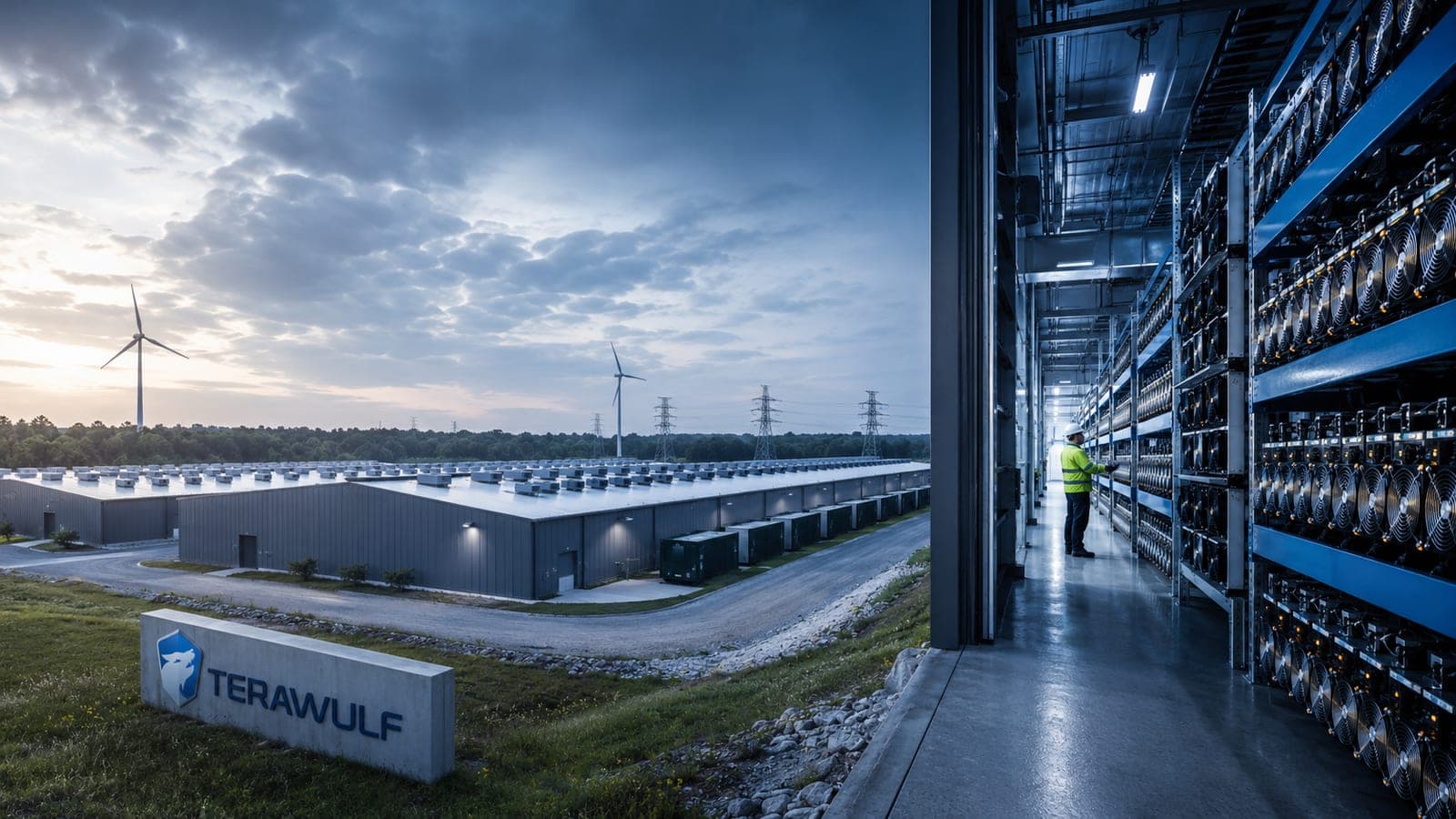
TeraWulf announced two transactions before the open on July 6, 2026. Through its subsidiary Raylan Data LLC, the company signed a 20-year lease with Anthropic for a purpose-built AI infrastructure campus at its Justified Data site in Hawesville, Kentucky [1][2]. The campus will carry roughly 401 MW of critical IT load, built in phases: initial capacity in service during the second half of 2027 and the full 401 MW by early 2028. The lease is expected to generate approximately $19 billion of contracted revenue over the initial term, with investment-grade credit support expected behind it; rent begins as each portion of the premises is delivered, with options to extend [1][2]. Separately, TeraWulf agreed to sell its entire 50.1% interest in the Abernathy Joint Venture to an investor group led by Fluidstack for roughly $530 million [1]. The stock closed at $21.18 on Thursday, July 2 (Friday was a U.S. market holiday), indicated about 16% higher in Monday's premarket [3], traded up as much as roughly 20% after the open [4], and was near $23.80 — up about 12.3% from the prior close, on volume above 24 million shares — around 10:08 a.m. ET on July 6, with the quote still moving.
What changed
Coming into today, TeraWulf was a former bitcoin miner pivoting into AI infrastructure, still waiting to prove it with a marquee tenant. When it acquired the Justified Data campus in February 2026, CEO Paul Prager said the company expected to secure a major customer commitment around the end of the second quarter [5]. The market grew impatient: WULF fell 17% in the week before the announcement, even while sitting on an 84% year-to-date gain [5]. The customer has now arrived, and for twenty years.

The economics, on the disclosed terms: $19 billion over 20 years averages about $950 million per year, or roughly $2.4 million per MW-year at full capacity — derived arithmetic for scale, since actual rent phases in only as premises are delivered [2]. The phrase that matters most for financing is "expected to be supported by an investment-grade credit" [1]: a two-decade contracted revenue stream with that kind of counterparty support is the collateral infrastructure lenders underwrite against.
The second transaction funds the strategy. TeraWulf will sell its 50.1% stake in the Abernathy Joint Venture — formed in 2025 with Fluidstack to build a 168 MW campus in Abernathy, Texas — to a Fluidstack-led investor group for about $530 million, paid in three installments: $250 million within 14 days of signing, $150 million by December 31, 2026, and roughly $130 million, subject to adjustments, by April 30, 2027, as laid out in the company's Form 8-K [2]. That monetizes an investment of about $450 million at a premium, hands the project to Fluidstack to keep leading, and recycles capital into campuses TeraWulf owns outright, per the company [1].

Why it matters
Duration transforms financing. Data-center construction at this scale is a capital-markets exercise, and after today a lender sees: twenty years of contracted payments, expected investment-grade support, and a tenant committed through 2048 [1]. That is how a company that started the day with a roughly $10.5 billion market value (measured at the July 2 close of $21.18 [5]) can credibly fund multi-hundred-megawatt builds. The day-to-day reaction is tracked on the TeraWulf (WULF) stock page.
Kentucky is becoming TeraWulf's center of gravity. Justified Data in Hawesville — about an hour southwest of Louisville [3] — now has its anchor tenant, and the company separately holds the Muskie Data Campus site in Eastern Kentucky, which it has said could support more than a gigawatt of capacity [5], alongside the Lake Mariner expansion in New York. The Abernathy sale shows the other half of the model working: develop with a partner, monetize at a premium, redeploy into wholly owned assets [1].
For the sector, the tenant list just got longer. Single-tenant AI campus leases of this size have mostly been hyperscaler territory; an AI lab anchoring 401 MW for twenty years extends the set of counterparties that can underwrite this kind of infrastructure.
What to watch
Construction milestones come first: first power delivery to the Anthropic facility in the second half of 2027, when rent begins on delivered premises, and the ramp to the full 401 MW by early 2028 [1][2]. Watch for any additional lease agreements or capacity commitments across Muskie and Lake Mariner [5], financing announcements for the Justified Data build, updates at TeraWulf's next results on our earnings calendar, and the Abernathy installments actually landing on the schedule set out in the Form 8-K — $250 million within two weeks, $150 million by year-end, the rest by April 2027 [2]. And treat the tape with care: the price, volume, and market-cap figures in this piece are snapshots from a fast-moving morning, each stamped with its time and source, and should be read against a live quote rather than as the day's final word.
Why is TeraWulf (WULF) stock up today?
TeraWulf announced a 20-year lease with Anthropic on July 6, 2026 for a purpose-built AI infrastructure campus at its Justified Data site in Hawesville, Kentucky, expected to generate approximately $19 billion of contracted revenue over the initial term [1]. On the same morning it agreed to sell its 50.1% Abernathy Joint Venture interest to a Fluidstack-led group for about $530 million [1]. The stock, which closed at $21.18 on July 2, was indicated about 16% higher premarket [3], traded up as much as roughly 20% after the open [4], and was near $23.80 (+12.3%) around 10:08 a.m. ET.
TeraWulf–Anthropic lease: quick answers
| Question | Answer |
|---|---|
| What was announced? | A 20-year lease with Anthropic at the Justified Data campus in Hawesville, Kentucky, plus the sale of the 50.1% Abernathy JV stake to a Fluidstack-led group [1]. |
| How big is the lease? | About 401 MW of critical IT load; roughly $19B of contracted revenue over the initial term, expected to be supported by an investment-grade credit [1]. |
| When does revenue start? | Rent begins as premises are delivered; initial capacity is expected in service in H2 2027, full 401 MW by early 2028 [1][2]. |
| What does the Abernathy sale bring in? | About $530M in three installments through April 2027, monetizing a ~$450M investment at a premium [2]. |
| What should investors watch? | Construction milestones, first power delivery in H2 2027, additional lease or capacity announcements, and financing for the build [1][5]. |
WULF price snapshots on July 6, 2026 — timestamped
| Figure | Value | Timestamp / basis |
|---|---|---|
| Prior official close | $21.18 | Thursday, July 2, 2026 (Friday July 3: U.S. market holiday) [5] |
| Market cap at prior close | ≈ $10.5B | At $21.18, per pre-announcement data [5] |
| Premarket indication | ≈ +16% | Before the July 6 open, per CNBC [3] |
| Post-open move (reported) | up ≈ 20% | Monday morning, July 6, per Investing.com [4] |
| Intraday quote (at publication) | $23.80 (+12.3% vs Jul 2 close) | ≈ 10:08 a.m. ET, July 6, 2026; day range $23.38–$25.04, volume ~24.8M — FMP live feed |
| Market cap at intraday quote | ≈ $11.8B | At $23.80, per FMP, ≈ 10:08 a.m. ET July 6; moves with the quote |
| Context into the news | -17% prior week; +84% YTD | As of the July 2 close [5] |
The stock moved quickly through premarket and the open; each figure above is valid only at its stated time.
What could move WULF next?
- Construction milestones and first power delivery in H2 2027: rent starts only as premises are delivered, so the schedule is the revenue [1][2].
- Ramp to full 401 MW by early 2028 at the Justified Data campus [1].
- Additional lease agreements or capacity commitments across the Muskie Data Campus (Eastern Kentucky, over 1 GW potential) and Lake Mariner [5].
- Financing for the build: the company has used high-yield debt before ($3.2B for Lake Mariner); terms of any new financing will set the economics [5].
- Abernathy installments landing: $250M within 14 days of signing, $150M by December 31, 2026, ~$130M (subject to adjustments) by April 30, 2027 [2].
TeraWulf stock FAQ
What did TeraWulf announce on July 6, 2026?
Two transactions: a 20-year lease with Anthropic, signed through subsidiary Raylan Data LLC, for a purpose-built AI campus at the Justified Data site in Hawesville, Kentucky; and the sale of its entire 50.1% Abernathy Joint Venture interest to an investor group led by Fluidstack for about $530 million.
How much is the Anthropic lease worth to TeraWulf?
Approximately $19 billion of contracted lease revenue over the initial 20-year term, expected to be supported by an investment-grade credit. As simple arithmetic that averages about $950 million per year, though actual rent phases in only as premises are delivered, starting in the second half of 2027.
When does the Kentucky campus come online?
Initial capacity is expected in service during the second half of 2027, with the campus ramping to its full roughly 401 MW of critical IT load by early 2028. Anthropic's rent obligations begin as each portion of the premises is delivered, with options to extend the lease.
What is happening with the Abernathy Joint Venture?
TeraWulf is selling its entire 50.1% interest to a group led by Fluidstack, its JV partner, for roughly $530 million paid in three installments through April 2027. That monetizes an investment of about $450 million at a premium, and Fluidstack will continue leading the 168 MW Texas project.
Why did WULF stock move so much on the news?
The lease converts TeraWulf's largest development campus into two decades of contracted revenue with expected investment-grade support — a repricing of revenue quality and business-model certainty. The stock had also fallen 17% in the week before the announcement while the market waited for a customer, so part of the move retraced that decline.